


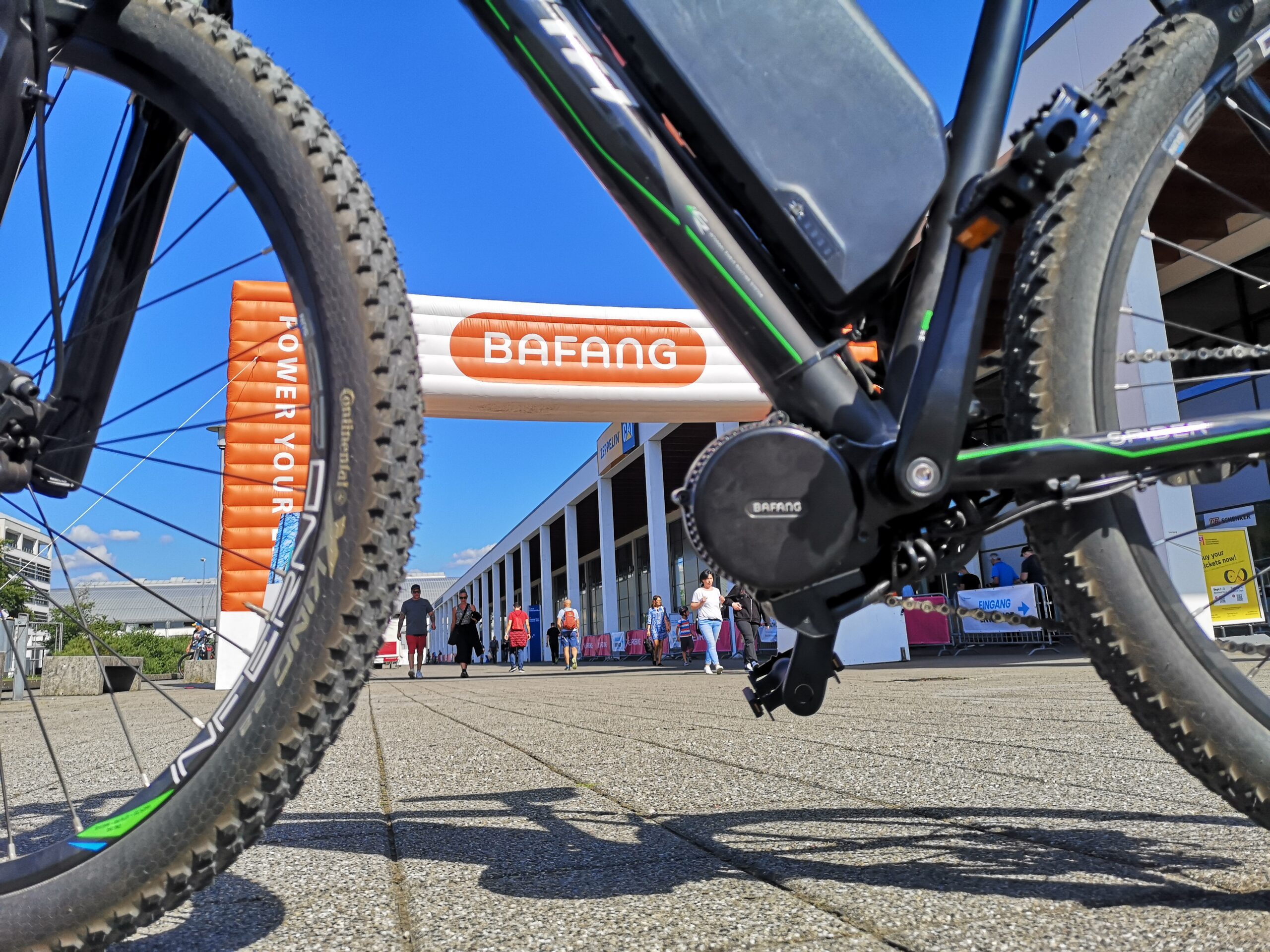
Will Bafang BBS conversion kits face more enforcement in the future?
The article’s answer is: yes.
How can you recognise a conversion kit that may require vehicle approval?
If a bicycle conversion kit carries CE marking only in relation to electromagnetic compatibility (EMC), rather than for the finished bicycle, this may indicate that additional requirements have not been established for the complete converted vehicle. In the context described here, the CE marking of a Bafang BBS DIY motor principally relates to electromagnetic compatibility.
Additional provisions may apply to a complete electrically assisted bicycle and to the parts or assemblies placed on the market, depending on the product’s actual characteristics. These may include machinery and other relevant product-safety requirements.
The absence of valid, applicable conformity documentation can be a warning sign. Consumers should then ask the manufacturer or seller for clarification, and may also contact the competent authorities.
Operating a vehicle outside the bicycle category
Operating a vehicle that requires registration or approval without complying with the applicable requirements may give rise to administrative offences or even criminal liability. The article criticises statements suggesting that motor power cannot meaningfully be measured and that unrestricted use is therefore lawful.
If an investigation takes place, the actual performance of the drive system and any documentation supporting it can become important. Incorrect statements or a lack of suitable evidence may have serious consequences.
The end user or person placing the converted vehicle into service remains responsible for its actual configuration. Confirmation from a seller concerning the motor or system’s performance may be useful evidence, but it does not replace the assessment of the entire vehicle. Without an invoice, suitable technical confirmation, installation documentation or specifications, explaining the system’s actual configuration during an inspection or after an incident can be difficult.
Verified sources: enforcement and regulatory initiatives
The following sources distinguish government consultations, police inspections and industry positions. None, by itself, demonstrates that a particular converted bicycle is legally classified as a motor vehicle.
- United Kingdom (28 September 2021): The UK Department for Transport published “Future of transport regulatory review: modernising vehicle standards”. It was a consultation, now closed; it should not be cited as proof that a proposed law came into force.
- Netherlands (7 February 2024): The Dutch police announced 247 new roller test benches. For pedal-assisted bicycles, the test checks the speed at which motor assistance stops. It does not directly establish a motor’s 250 W mechanical rated continuous power. See the police’s technical explanation.
- Germany (2 October 2025): Gelsenkirchen police reported the seizure of a home-built e-bike. The police stated that the 51-year-old rider travelled at approximately 30 km/h without pedalling and that investigations were initiated on suspicion of driving without a licence and violating compulsory insurance law. This is a different incident from the older Der Spiegel report about a 70-year-old man; the police notice does not establish a conviction.
- German industry (29 September 2021): The ZIV published an industry self-commitment against tuning and tampering. This is an industry position, not legislation in its own right.
Technical distinction: A bicycle’s legal classification depends on its actual characteristics, including rated continuous motor power, pedal-dependent assistance and assistance cut-off. A roadside assistance cut-off test is not the same thing as a mechanical power measurement, a product conformity assessment or vehicle approval.
Source review: 16 November 2026. Where available, official sources replace older press reports. The original article also cited other 2024 media reports as historical examples; those reports are not presented here as independently verified.
GutRad’s approach
As the debate about e-bike conversion kits intensifies, GutRad’s stated aim is to offer technical solutions for the European market. Users who want to operate a Bafang BBS DIY conversion without vehicle registration must be able to establish that the finished vehicle meets the applicable criteria. Suitable performance documentation can help establish the operating characteristics.
Editorial note: Some claims and examples in the original article are time-specific. Before publication on LIVE, the cited enforcement cases, applicable legal provisions and source links should be checked against current primary sources.


