


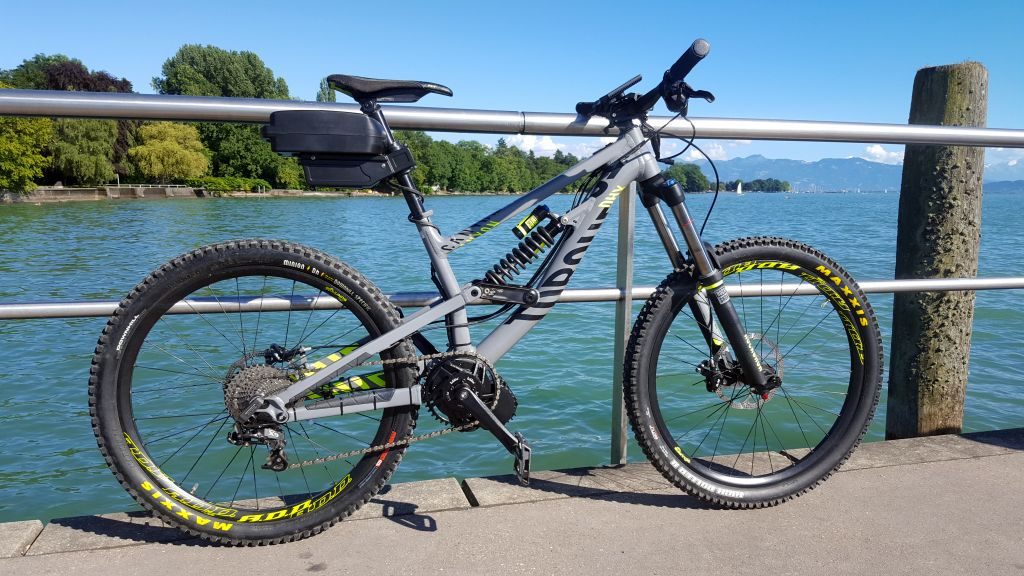
Why Bafang does not factory-limit its BBS motors to EN 15194
Bafang’s approach to the BBS01, BBS02 and BBSHD is shaped by economic, technical and market-specific considerations, rather than exclusively by the European EN 15194 standard.
🔧 1. The BBS is a global DIY conversion motor
Bafang markets the BBS series worldwide, not only in the European Union.
- Many countries, including the United States, Canada and Australia, have different requirements and limits.
- In North America, e-bikes rated at 750 W or more are permitted in certain regulatory categories; power is a selling point in those markets.
- The motor is expressly offered for the DIY conversion market, where it is installed on existing bicycles.
➡️ A factory-installed EU-specific lock would restrict this international market.
🛠️ 2. Software that dealers and OEMs can configure
Bafang supplies the BBS as an OEM component (Original Equipment Manufacturer).
- Dealers or brands can adapt settings and limits, for example through a display or configuration software.
- The article’s position is that responsibility for the conformity of a finished vehicle lies with the party placing that vehicle on the market, rather than automatically with the supplier of an individual motor.
➡️ The motor is intended as a base component, not necessarily as a complete, ready-to-use EPAC system.
⚠️ 3. No single worldwide requirement to limit every motor to 250 W
- EN 15194 addresses complete electrically power-assisted cycles (EPACs), rather than treating an individual motor as a complete bicycle.
- A motor manufacturer does not necessarily determine conformity for every possible installation. The manufacturer or party placing the complete vehicle on the market has corresponding responsibilities.
➡️ Where Bafang sells a motor as a component rather than placing a finished bicycle on the market itself, the requirements must be assessed in the context of that product and its intended use.
📦 4. Product range built on a common platform
The BBS range includes versions with different marketed power ratings:
- BBS01B: 250 W
- BBS02B: 500–750 W
- BBSHD: 1,000 W and above
The article describes differences particularly in controller parameters and stator winding configurations, while referring to a shared software concept.
➡️ A common, configurable platform may be more economical than producing numerous permanently restricted versions.
✅ Conclusion
According to the article, Bafang does not restrict the entire BBS range to an EU-specific configuration because the motors are sold globally, are intended as configurable OEM components and are used in differing legal environments.
For use on German roads, the finished bicycle must meet the applicable legal criteria. An additional technical limitation and monitoring solution such as the GutRad StVO Module is intended to help achieve a defined pedelec operating configuration on compatible BBS UART systems. The module itself is not a vehicle approval.


