


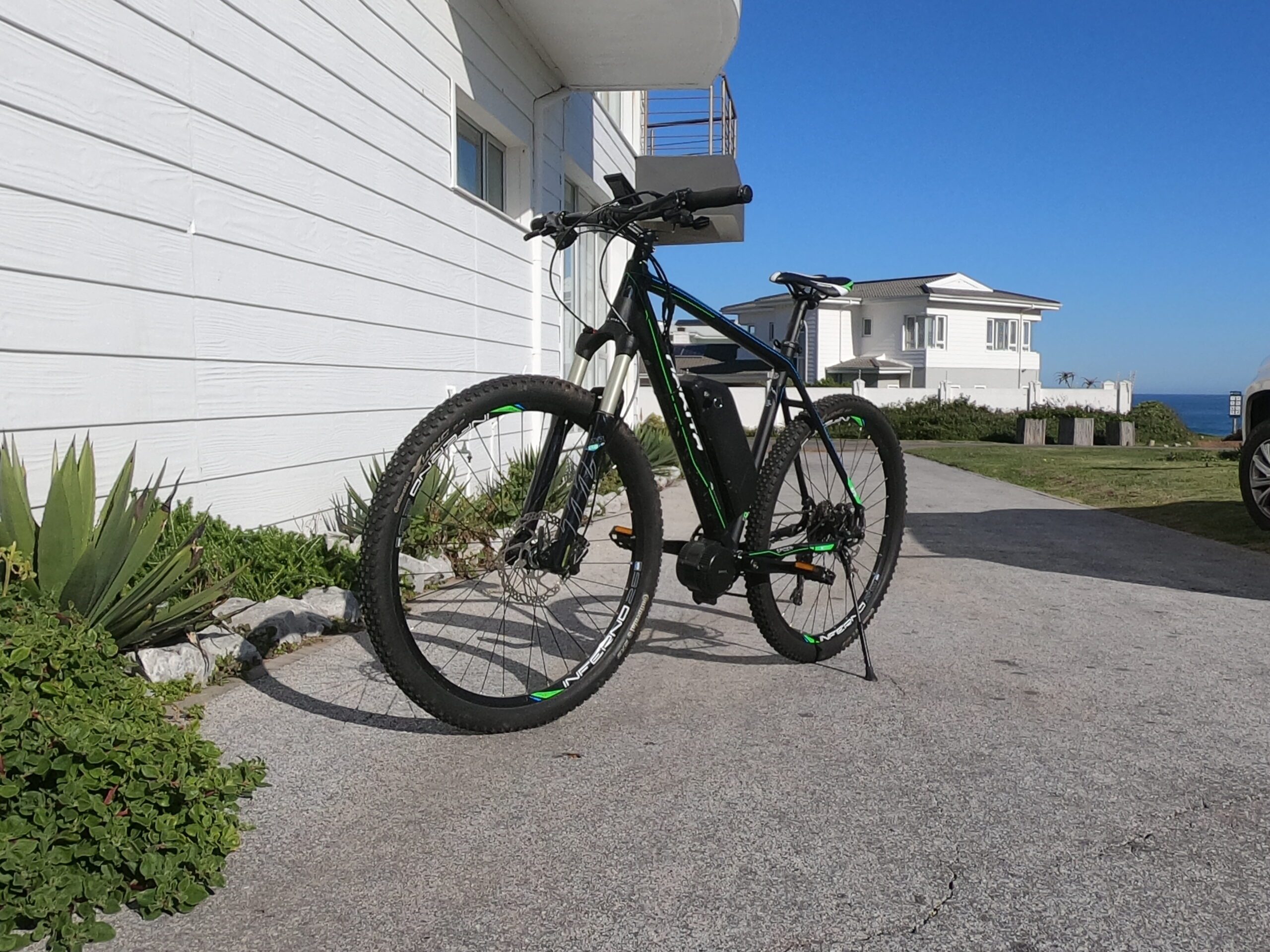
Bafang BBS: powerful and freely programmable
Bafang mid-drive motors such as the BBS01, BBS02 and BBSHD are established retrofit drives. On compatible UART versions, numerous controller parameters can be modified with readily available tools. This programmability does not automatically make a private BBS conversion illegal. What matters is the actual technical condition of the completed bicycle.
Classification as a bicycle with auxiliary electric assistance depends, among other things, on rated continuous power of no more than 250 W, assistance decreasing as speed rises and ending by 25 km/h and when the rider stops pedalling. What matters is not what the motor label says but what the system actually does.
What is the special challenge of a DIY conversion?
Programming the controller can establish a desired state. With freely programmable equipment, however, there is also the question of what happens after someone changes relevant parameters later. A 250 W sticker, a displayed value or a screenshot of programming software does not prevent future changes to the controller data. This is where the GutRad approach differs from a one-time programming exercise.
What does the GutRad StVO Module do?
Developed for compatible Bafang BBS systems using UART, the module establishes a defined, reproducible and documentable drive-system operating state:
- Before the initial adjustment: the existing controller data are backed up.
- Then: the module writes the GutRad parameter set provided for the compatible system.
- At every startup: relevant controller data are checked again.
- If values differ: detected changes are overwritten with the stored GutRad values.
This goes beyond programming a controller to particular values once: the intended state is rechecked every time the system starts.
250 W means rated continuous power
The statutory pedelec limit relates to rated continuous power of no more than 250 W. Short-term higher electrical input or peak power is not automatically the same quantity. Both “the motor can produce more than 250 W, so it can never be a pedelec” and “the motor says 250 W, so the bicycle is automatically a pedelec” are oversimplifications. Actual characteristics and behaviour determine the classification.
25 km/h and the throttle
Pedal assistance in the intended pedelec operating mode must end by 25 km/h. Normal motor-driven riding via a throttle is not part of ordinary pedelec operation. Statutorily permitted starting or walk assistance up to 6 km/h is a separate function.
How subsequent changes are handled
We deliberately avoid saying that the system is “impossible to tamper with”. What matters technically is how the module reacts to changes in monitored controller parameters: altered relevant parameters are detected at the next startup and overwritten with the stored GutRad set. A change to these monitored values therefore does not remain indefinitely as the new operating configuration.
The GutRad Key is not a tuning switch
The Key is not needed for intended module operation. Its principal role is removal and restoration: the controller data present before installation are backed up so that the previous configuration can be restored, for example after a withdrawal or removal. The Key is not intended to switch between a “legal mode” and a “tuning mode”.
For permanent use
The converter can overwrite the originally backed-up controller data with the GutRad StVO parameter set. The backup then contains only the GutRad set; earlier unrestricted or deviating settings cannot subsequently be recovered from that backup.
Responsibility stays with the converter
The GutRad StVO Module is not official approval of the complete converted bicycle. The converter remains responsible for its safe condition, including correct installation and all other safety-relevant components. GutRad documents the operating state established and monitored for the compatible drive; responsibility for the complete bicycle remains with the converter.
Does a private converter need GutRad documentation?
A GutRad document does not create an exemption from vehicle approval. Any exemption follows from the bicycle’s actual technical characteristics. Private converters must decide whether they want additional documentation of the condition established and monitored by the module. That documentation does not replace vehicle approval or individual expert inspection.
In practical use since 2019
The StVO Module has been offered since 2019. According to GutRad’s feedback and experience, we are not aware of a case in which a qualified inspector or expert has objected specifically to the functioning of a properly used module. This experience is neither official approval nor a legal guarantee.
What GutRad expressly does not claim
- A Bafang BBS conversion without a GutRad Module is not automatically illegal.
- Installing a GutRad Module does not automatically make every converted bicycle compliant.
- A 250 W sticker alone does not prove pedelec status.
- One-time programming is not the same as repeated technical checking.
- The GutRad Key is not a road/off-road or pedelec/tuning switch.
- GutRad does not assume the converter’s responsibility for the complete vehicle.
At a glance
- Installation: back up existing controller data and establish the defined GutRad set.
- Every startup: check relevant values and overwrite detected deviations.
- GutRad Key: removal and restoration, not tuning.
- Permanent operation: the original backup can, if desired, be permanently replaced with the GutRad set.
- Responsibility: the converter remains responsible for the complete bicycle.
Further reading
- Bafang BBS DIY conversion: Pedelec Status, Responsibility and the GutRad StVO Module
- Section 1 StVG — official German legislation
- GutRad StVO Module — shop overview
- GutRad StVO Module, Version 2.0
General technical and legal information only. This article does not replace individual legal advice or a technical inspection of a particular vehicle.


