


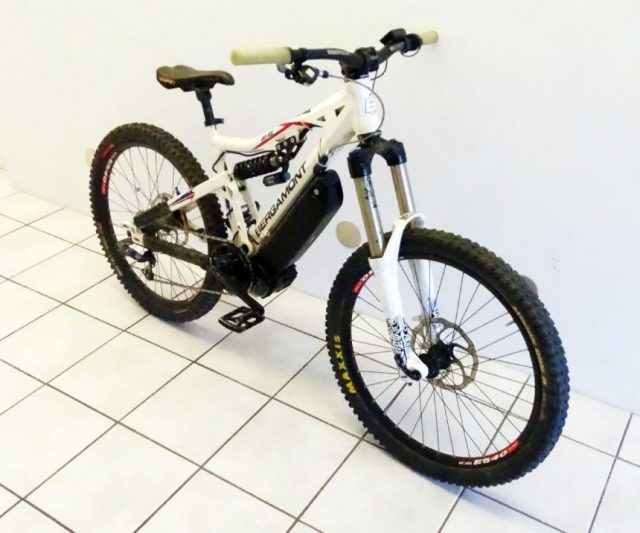
Industry associations warn about retrofit conversions
According to experts cited in the original article, online suppliers of conversion kits often provide customers with insufficient information. Industry associations have published guidance on this subject, including material available from the Zedler Group.
Discussions on forums and online platforms frequently concern the permissible 250 W continuous rated power. Some participants even suggest that a motor’s peak output can be unlimited. Can that really be assumed?
Some articles compare the output of Bafang BBS motors with manufacturer specifications for Bosch, Brose or Shimano systems in vehicles belonging to category L1, and suggest applying UNECE Regulation No. 85 directly to private conversions. They often fail to explain how the proposed measurement would actually be performed.
UNECE Regulation No. 85 sets out requirements and measurement procedures for relevant vehicle propulsion systems. Its application and the appropriate assessment procedure depend on the vehicle and the regulatory context.
The source article refers to manufacturers’ laboratory measurements, checks by technical services such as TÜV or DEKRA, and approvals by Germany’s Federal Motor Transport Authority (KBA) in relevant approval procedures.
It also cites production pedelecs using related Bafang motor technology, including models marketed by Fischer, Prophete and NCM. The original reference links are:
Motor components alone do not necessarily require the same documentation as a complete vehicle subjected to a specific type-approval procedure. The requirements for a finished conversion must be considered separately.
The original article also discusses the sourcing of retrofit components through overseas traders and online marketplaces, including Alibaba and AliExpress, and storage facilities within the European Union. Such supply routes do not, by themselves, establish whether a particular product or transaction complies with tax and product-safety requirements.
Editorial note: This is a translation of an older source article. Historical claims about market practices and approvals should be verified before publication.


